


In the context of air pollution being a pressing issue, Hanoi is gradually developing a green and sustainable transportation system, with the TNGo smart bicycle project recognized as a highlight in applying digital transformation to protect the environment and improve citizens’ commuting habits.
Challenges from air pollution and the direction toward sustainable transportation
Hanoi has repeatedly ranked among the cities with the worst air quality in the world, mainly due to the high density of personal vehicles and limited transportation infrastructure. In response to this situation, the Hanoi Capital Law 2024 was passed by the National Assembly, establishing a legal foundation for developing transportation in a green – clean – smart direction.
The law clearly defines low-emission zones and grants the Hanoi People’s Council the authority to issue special policies to promote investment in public transportation infrastructure, encourage models such as transit-oriented development (TOD), and support high-capacity passenger transport systems.
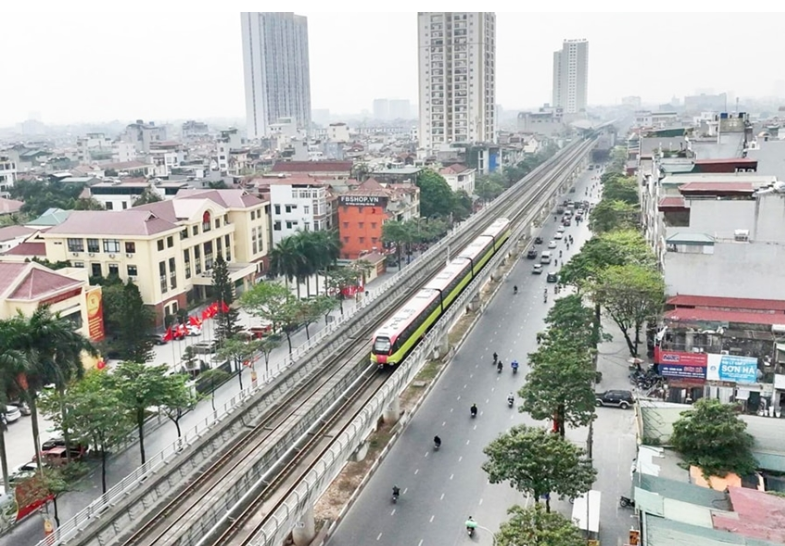 |
| Nhổn – Cầu Giấy Urban Railway Line Photo: Quang Thai |
Hanoi gradually expands its green transportation ecosystem
According to the Hanoi Department of Transport, the project is entering an expansion phase, increasing the total number of vehicles to 2,000 bikes and rolling out across 9 districts. Phase 2 will raise the number to 3,000 bikes at 350 stations, aiming to build a citywide connected green transportation network.
Mr. Dao Viet Long, Deputy Director of the Hanoi Department of Transport, emphasized:
"We hope TNGo will not only support connectivity with existing public transportation modes but also lay the foundation for changing citizens’ commuting habits toward more environmentally friendly practices."
TNGo Smart Bicycles – A Highlight in Hanoi’s Green Transportation Journey
In this trend, the TNGo smart community bicycle project, developed by the Institute for Digital Transformation Research & Application (IDT) in collaboration with Tri Nam Group, has officially launched in Hanoi with an initial scale of 1,000 bikes (500 e-bikes and 500 conventional bicycles). Notably, the entire project is fully privatized, without using state budget funds.
According to Mr. Do Ba Dan, Chairman of Tri Nam Group, TNGo stations are strategically located near bus stops, parks, tourist sites, and densely populated areas to ensure easy access and connectivity with other public transportation modes.
During the first 7 days of the trial, the system recorded 16,450 new accounts and 7,454 trips with an average distance of 6.3 km per trip – impressive figures demonstrating positive community reception.
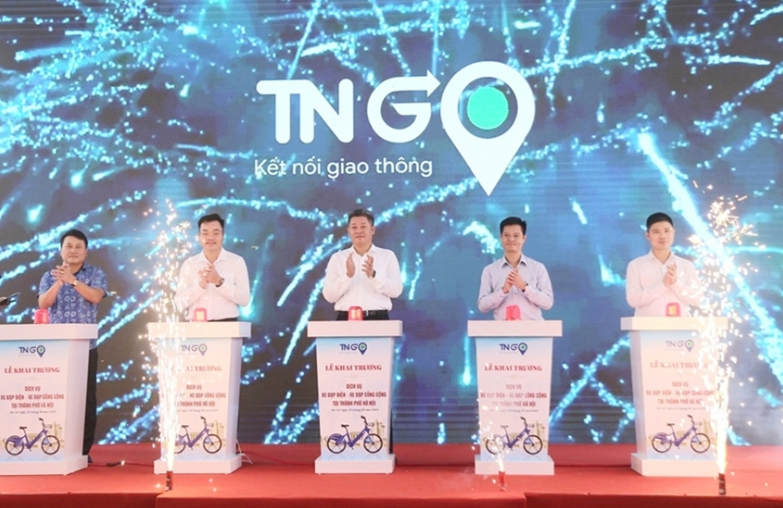 |
| Hanoi officially launches e-bike and public bicycle services. Photo: Linh Han |
Digital Transformation for the Environment – The Dual Goal of TNGo and the Institute for Digital Transformation Research & Application (IDT)
The TNGo project is a clear example of combining technology with green transportation, simultaneously improving operational efficiency and helping reduce emissions. It is also part of the “Green AI” strategy promoted by IDT – leveraging digital technology and artificial intelligence to achieve sustainable development goals in Vietnam.
TNGo is not just a public bicycle service – it is a strategic step that combines digital transformation with green solutions in urban transportation. When properly integrated with bus routes and metro lines, TNGo will become an important link in the smart, environmentally friendly transportation network of Hanoi.

' %2F><%2Fsvg>)