


According to The New York Times, over the past two years, AI has dominated public discourse, overshadowing other fields of technology. Many fear that AI will transform every industry, destroy the world, or even replace humankind in the future. But what exactly is AI? Where did it come from? How does it work? And in which direction is it evolving? — questions that not everyone can answer clearly.
Before ChatGPT appeared, it was difficult to persuade readers to care about AI. Sam Altman, CEO of OpenAI — the organization behind the world’s most famous AI tool — repeatedly emphasized the need for AI regulation. Yet, at that time, few people paid attention; editors shrugged, and readers yawned.
Everything changed dramatically after the shocking debut of ChatGPT, which triggered a global race in AI development. Everyone started talking about artificial intelligence, though not everyone truly understood what they were discussing.
In this context, several insightful books on AI can help readers gain a deeper understanding and explore different perspectives on the questions that remain unanswered.
The Alignment Problem (2020)
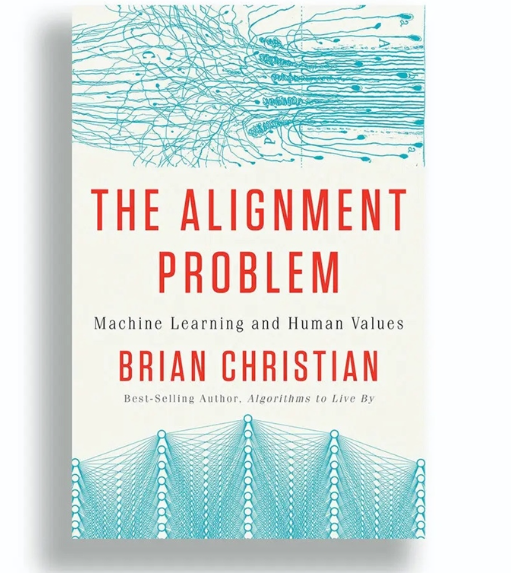 |
| “The Alignment Problem” is an excellent choice for readers who want to explore the fundamental issues of artificial intelligence. Source: The New York Times |
If you plan to read one book to gain a foundational understanding of AI, The Alignment Problem is an excellent choice. Written by Brian Christian and published in 2020, the book appeared just before the explosive wave of AI interest began.
According to The New York Times, this timing allows The Alignment Problem to maintain a more restrained and objective perspective compared to many publications released amid the post-ChatGPT AI craze.
The book’s core value lies in its thoughtfully distilled insights drawn from computer scientists, cognitive psychologists, and philosophers.
“The problem with AI is not that it will destroy the world,” Christian explains. “The problem is figuring out how to align machine behavior with human values.”
This, he argues, is a profound challenge humanity has struggled with since the invention of the cotton gin.
Christian writes:
“As machine-learning systems become more widespread and powerful, we increasingly find ourselves in the position of the ‘sorcerer’s apprentice.’ We summon a power—autonomous yet obedient—give it a set of instructions, and then frantically try to stop it when we realize the commands were imprecise or incomplete.”
Artificial Intelligence: A Guide for Thinking Humans (2019)
Artificial Intelligence: A Guide for Thinking Humans, written by Melanie Mitchell, Professor at the Santa Fe Institute, is another must-read for anyone seeking a well-rounded understanding of AI. A veteran in computer science and complex systems, Mitchell is among the few with decades of deep expertise in the field.
The book offers a comprehensive overview of AI’s development, starting from psychologist Frank Rosenblatt and his perceptron neural network in the 1950s, to modern computer scientist Fei-Fei Li of Stanford University, who created ImageNet—the massive image database that revolutionized machine learning.
Mitchell presents AI’s evolution through a detailed, chronological narrative that captures key milestones: from the Dartmouth Conference in the mid-1950s—where the term “artificial intelligence” was first coined—to the rise of Natural Language Processing (NLP) in the 2010s.
Through clear and elegant explanations, Mitchell answers essential questions about AI, helping readers understand this complex field without technical barriers.
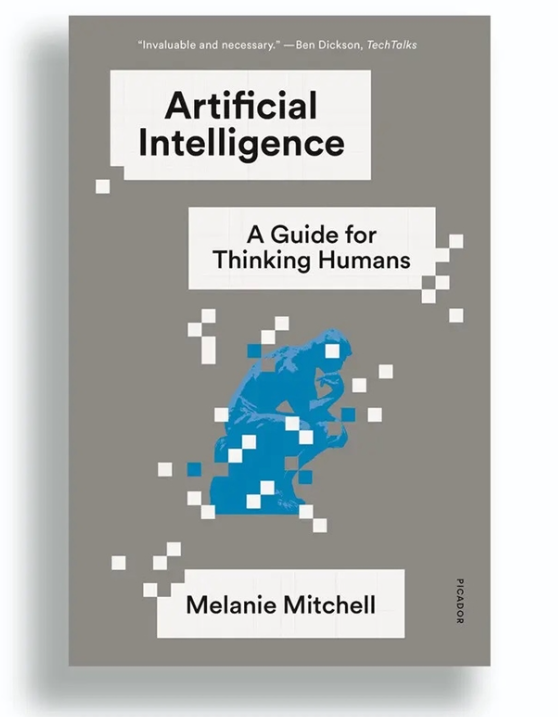 |
| “Artificial Intelligence” offers a comprehensive overview of the field of AI. Source: The New York Times |
The Algorithm (2024)
 |
ChatGPT said:“The Algorithm” explores the use of artificial intelligence in human resource management. Source: The New York Times. |
With a title that seems broad and abstract, “The Algorithm” by Hilke Schellmann primarily focuses on the use of artificial intelligence in human resource management.
AI tools can be applied to various HR functions such as recruitment, evaluation, monitoring, and employee retention. In theory, AI offers clear benefits—improving management efficiency and reducing human bias. However, it also carries the risk of misuse.
Investigative journalist Schellmann portrays both sides of this issue with keen insight. According to The New York Times, one of the book’s strengths lies in its portrayal of AI as a human-made tool, avoiding grand theories and far-fetched speculations.
She began her investigation with great optimism about this emerging technology:
“I was thrilled to start exploring AI in the field of employment. I thought AI might finally be the solution for hiring,” wrote Schellmann.
However, her enthusiasm gradually faded:
“At least some of the tools people and companies use to make hiring decisions don’t work as expected. At least some companies are making high-stakes hiring decisions based on flawed, useless algorithms. This harms and prevents qualified people from getting jobs.”
AI 2041 ( 2021)
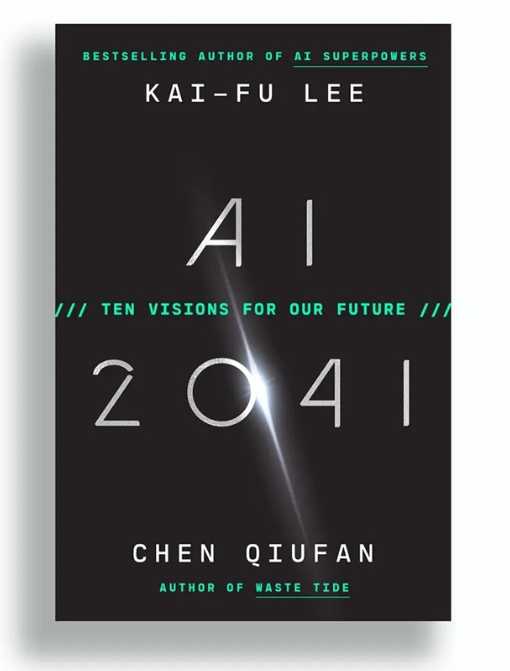 |
| ‘AI 2041’ is a remarkable work that blends science with science fiction in a seamless and thought-provoking way. Photo: The New York Times. |
The book is co-authored by Kai-Fu Lee, a leading AI expert and former president of Google China, and Chen Qiufan, a celebrated science fiction writer. This collaboration creates a unique structure: each chapter begins with a futuristic short story by Chen, followed by a scientific explanation and analysis by Lee, allowing readers to enjoy both imaginative storytelling and real-world technological insights.
The stories span continents — from Nigeria and South Korea to Sri Lanka — illustrating the multifaceted impact of AI on humanity and society. For instance, a Nigerian content creator uses deepfake technology to craft realistic videos; an orphan in South Korea learns from an AI tutor; and a self-driving car causes an unexpected accident in Sri Lanka.
Rather than offering dry predictions or overly simplified explanations, AI 2041 strikes a perfect balance between imagination and practicality.
The book also emphasizes humility when discussing the future of technology, quoting Amara’s Law:
“We tend to overestimate the effect of technology in the short run and underestimate its impact in the long run.”

' %2F><%2Fsvg>)